Poetry and Gardening

Musings from the days of a creative writer/gardener with a true appreciation for nature, meditation, and poetry.

Tuesday, July 14, 2015

The Buddha in the Garden Moves to a New Location

Through the years, the Buddha that is the "logo" for this blog has moved from a three-bedroom Victorian-style house with glorious rose gardens (dozens of bushes) and a sunny cottage garden to a third-floor balcony garden overlooking a meadow where deer visited every night, and from there to a 1921 bungalow near the uptown area of a small Southern town.  Now that Buddha is sitting under my orange-red-green striped umbrella on the back patio pad of my new place, a townhouse ten minutes from downtown Durham.  No matter where he is, the Buddha is comfortable, but he's getting old and the paint is beginning to chip.  I love him even more than when he was new . . .


To celebrate the way this Buddha has enhanced each garden where he (and I) has lived, I've chosen to share a poem by one of the classic masters.  Simple, sweet, and natural.

All sentient beings are essentially Buddhas. 
As with water and ice, there is no ice without water; 
apart from sentient beings, there are no Buddhas. 
Not knowing how close the truth is, 
we seek it far away 
--what a pity! 
Hakuin Ekaku Zenji

Sunday, June 14, 2015

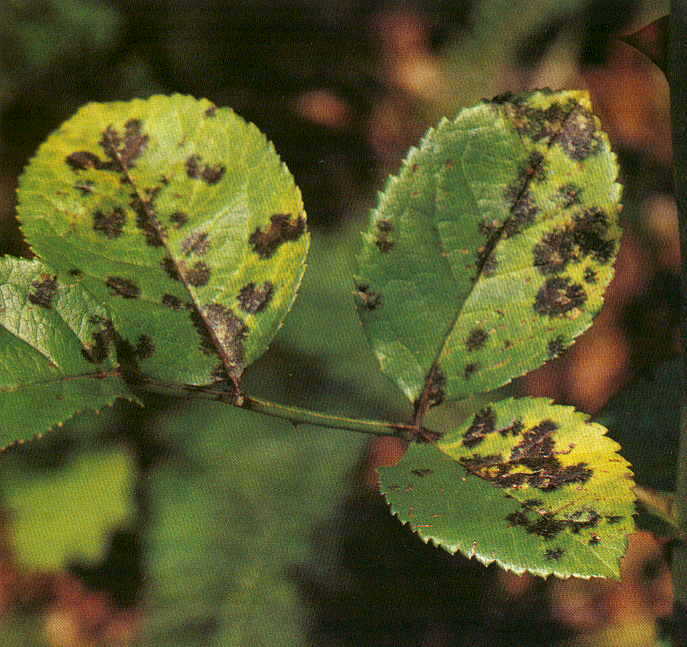
The Dreaded Black Spot, Scourge of a Rosebush Life

This blog post is one of (I'm sure!) many I'll write in the near future, so if I don't cover something, shoot me a message, and I'll do a blog on it.

Roses.  I love them, but I've almost given up on roses several times because of the horrible infestations of Black Spot that my poor bushes would endure year after year.  At one point, I had 54 bushes, all types of roses, and I spent some serious money on hybrids and disease resistant breeds.  I hated seeing the first indication of Black Spot because I knew if I didn't spend a couple of hours a day hand-picking the leaves, then it would spread faster than butter in July.  You have to love roses to put up with their weakness to disease (and don't get me started about Japanese beetles).

Through the years, I found more than half a dozen sworn-by-the-expert cures but none of them truly worked with 100% efficiency and several made a serious dent in the checkbook.  And I've also discovered that weather can really be your enemy when you're trying to treat Black Spot.


There are a couple of things that have worked for me during the years, and one of them that I would normally recommend is something I just discovered is extremely toxic to animals, so I'm leaving that one off my list of suggestions.

Because the disease is spurred on by heat and humidity, Black Spot usually happens during the height of summertime, which means you get to enjoy your roses for about a month (where I live) before you see the first telltale signs.  If you know you might have the disease in some existing roses, it's a great idea to treat before you see the slightest signs of the disease.  Prevention includes making sure that the space where your roses are planted is clean of debris and that the roses have plenty of sunlight and breathing space.  If the bushes have grown since first planted and are now touching each other, Black Spot will spread like . . . well, the plague.

So, preventing Black Spot:
  • Plant roses at least 24" apart in holes that are three times the size of the root ball.
  • Ensure roses get sunlight most of the day and that they are watered regularly (Note:  everything can be argued, and I'm sure my sister will tell you that the roses she has out behind her house facing a very busy highway have been very successful thriving without any human help whatsoever).
  • Keep the ground around the roots of the plant clean of dead leaves and debris (Black Spot moves into the plant when the spores on the ground connect with the rose via ground water).
  • As soon as the bush starts to leaf out, spray the bush with a Baking Soda Spray (1 tsp baking soda, 1 quart water). Add a couple of drops of non-bleach detergent to the mix so that the baking soda will stick to the leaves.
  • Make sure that every leaf is sprayed, top and bottom.
  •  If the Baking Soda Spray doesn't work, check with the local greenhouse for Neem oil.
  • Watch the plants and clean, water, treat them at least every week, preferably every four days.
  • Caveat:  Some gardeners swear by a very strong fungicide, and you might want to try that, too, but I've tried to deal with this issue as naturally as possible.
Throughout the summer, continue this prevention program and make sure you trim/prune your bushes regularly so that you'll keep this disease (and others) at bay.

The point is to get roses that look like this:


~~~***~~~   ~~~***~~~   ~~~***~~~   ~~~***~~~   ~~~***~~~   ~~~***~~~   ~~~***~~~

And this post's poem is, of course, about the beautiful rose.

'Asking for Roses' by Robert Frost

A house that lacks, seemingly, mistress and master, 
With doors that none but the wind ever closes, 
Its floor all littered with glass and with plaster; 
It stands in a garden of old-fashioned roses. 

I pass by that way in the gloaming with Mary; 
'I wonder,' I say, 'who the owner of those is.' 
'Oh, no one you know,' she answers me airy, 
'But one we must ask if we want any roses.' 

So we must join hands in the dew coming coldly 
There in the hush of the wood that reposes, 
And turn and go up to the open door boldly, 
And knock to the echoes as beggars for roses. 

'Pray, are you within there, Mistress Who-were-you? ' 
'Tis Mary that speaks and our errand discloses. 
'Pray, are you within there? Bestir you, bestir you! 
'Tis summer again; there's two come for roses. 

'A word with you, that of the singer recalling- 
Old Herrick: a saying that every maid knows is 
A flower unplucked is but left to the falling, 
And nothing is gained by not gathering roses.' 

We do not loosen our hands' intertwining 
(Not caring so very much what she supposes) , 
There when she comes on us mistily shining 
And grants us by silence the boon of her roses. 

Monday, June 1, 2015

Deadheading Primroses

Recently, I experimented with various  plants in order to determine which would be a healthier plant if I did some old-fashioned deadheading.  Some worked well; others didn't.  I thought it might be a good idea to share info about primroses with those of you who love them as much as I do.
Primroses (Primula polyanthus) are an old-fashioned perennial that have enjoyed popularity for hundreds of years.  They are native to the Northern Hemisphere.  Over 400 species of the rosette-like plant exist both in the wild as well as cultivated in proper gardens, and one of the tricks primrose gardeners learn early is that their primrose bed will last much longer is properly deadheaded.

Deadheading Primroses
Tip: Make sure to sterilize your scissors or pruning shears before using them to deadhead your primroses.
Deadheading simply means grooming the plant. By removing the spent flower, you prevent your plant from going to seed, and allow it to mature. Cutting back the spent flower stems also encourages new growth, so you'll see fresh flowers. Once your plants have started to thrive, a simple walk around the garden several times a week allows you to see how your primroses are progressing and whether you might need to clean up the flowers that are spent.
·        Start checking your garden in late spring.
·        Carry a pair of scissors or a small pair of pruning shears in your pocket for the task. Some gardeners prefer to simply pinch away the spent flower between thumb and forefinger, but a set of scissors makes it easier to snip away the dead flower/leaves.
·        Wear rubber gloves since some people might be allergic to certain varieties of plants. It also curbs the spread of disease if your naturally oily fingers are protected. Certain floral diseases easily spread when our fingers flit from one flower to another.
·        Look for the flowers that have begun to fade or are drying out.
·        Reach down to the base of the flower stalk and hold the dead flower gently.
·        Bend the flower to expose the stem, then either pinch or snip the dead flower away from the plant.
·        It's a wise idea to carry a small bag or wear an apron and drop the dead flower in the bag/apron rather than on the ground. You can dump your deadheaded materials into a recycling pile when you're done with your task.
·        Because too much water will rot primroses, check them occasionally and clip off any yellow or rotten lower leaves you see around the base of the plant. Removing rotten leaves promotes new growth. Your primrose bed might seem a bit droopy after you deadhead and trim old growth, but you will be rewarded when new buds start to arrive.
·        If primroses get too wet, they can develop conditions like crown or root rot and garden bugs, like aphids or spiders, may attack the plants.
Once your plants stop blooming, pull the primroses from the ground or your pots and put into containers until fall. The best soil is gritty and humus-rich. Keep your containers in a sheltered spot and keep the plants moist but not wet.
Growing Primroses
You can grow primroses from seed or purchase your plants from a grower.  If you choose to grow them from seed, be aware that the seeds are exceptionally small and it is difficult for the novice gardener to be successful starting these plants from seed.
Most primula varieties flower reliably and are easy-to-grow. Plant them in sun or partial shade and make sure to choose an area or pot that provides good drainage.  Primroses don't like to be wet!  If you can shelter them, you'll have very happy plants.
Offering your plants liquid fertilizer every 2 weeks or so will encourage them to produce fresh buds and create a beautifully flowering plant. 
Varieties
Most of the 450+ species of the genus primula like cooler weather and will not tolerate midsummer heat. They come in every color of the rainbow and the species names span the alphabet.
The varieties are distinguished by their rosette of leaves that resemble the leaves of a head of lettuce. In the center of the rosette are the flowers. Each flower has five petals joined at the base.  Flowers appear on leafless stalks. Common colors include white, red, blue, yellow, purple, and cream, but some species also produce bi-colored flowers.
THE POEM
Many poets have written about the beauty of primroses, but this one is my favorite:  
"My Primrose" by Joseph Horatio Chant

My sweet primrose with thy open face,
And with fringe-like leaves, without a trace
Of coarseness, either in flower or stem,
Among all my plants thou art the gem.
My lovely lilies soon disappear;
Thy bloom is constant through all the year;
In summer's heat and winter's cold,
Undimmed the light of thy floral gold.
Or if thy color be pink, or blue,
Or white as snow, thou art ever true;
My room is bright with thy smiling eyes,
And thy fragrance rare I also prize.
Thou hast done thy part, my little pet--
Let me keep thy roots forever wet,
But guard with care all thy tender leaves
And growing crown, which the earth-crust heaves.
Thou dost heaven-ward tend, aspiring high,
To kiss the stars in the vaulted sky,
And they look down from the azure blue,
My sweet primrose--they are smiling, too.


Wednesday, May 20, 2015

Gardening Advice: Getting rid of flying ants

Quick Tips to Get Rid of Flying Ants
By Dawn Reno Langley

Most ants crawl, but some varieties fly, and those might get into your hair, your food, and your trash, but some are far more damaging than irritating. Getting rid of the pesky creatures is fairly easy if you know how—and if you can determine what type of flying ants you have.
Types of Flying Ants
Before you bring out the pesticide spray to get rid of those pesky flying ants, take a closer look to determine what type of bugs you have. According to University of Florida entomologists, several characteristics make it easy to distinguish termites from flying ants. Because there are dozens of types of carpenter ants, some of which fly, gardeners and home owners should look at the features that are easiest to identify. The University of California’s Integrated Pest Management Program offers excellent graphics of the differences between termites and ants, which include:
·        Wings:  Termite’s wings are equal length; flying ants wings are longer in the front and the rear set of wings is half the size.
·        Waists:  Ants have a constricted waist and termites have a broad waist.
·        Color:  Ants are dark; termites are a lighter color.
Where They Live
Ants nest in debris or foliage around a building’s foundation, but they also can build nests in small cracks or holes anywhere in a building. If you find them inside your home, it is a good idea to determine whether the flying creatures you see are, indeed, flying ants or whether they are termites. Carpenter ants damage wood structures almost as effectively as termites, and the easiest way to see whether your building is home to them is to scrutinize the area around your siding and walls for little trails of sawdust.  Those trails indicate there’s a nest nearby.  Whether it’s a nest of termites or carpenter ants, you must be proactive.
When You Find Them
If you discover flying ants during the summertime, there’s a good chance they just happened to get inside because your house/building is more open during that season. If it’s wintertime, chances are they’ve nested in your building. Flying ants are not active in the winter. Termites tend to swarm around rotting or moist wood, and if you see them inside, you might have an infestation. If you determine you have termites, call a pest control company. If you have flying ants, you can take steps to handle the infestation yourself.
Protect Your Garden and Buildings
1.      Trim bushes and low shrubs that hug the foundation of your building.
2.      Keep mulch at least a foot away from siding.
3.      If possible, create a cement barrier at the base of your building.
4.      When building fences or decks, choose a termite-resistant material.
5.      Keep structures dry and well-ventilated.
6.      Remove piles of wood or debris from the area.
7.      Repair any cracks or holes in your building.
Removing the Ants/Termites
·        Contact a professional termite control company if you suspect you have a termite infestation. They are licensed to use the correct pesticide to rid your building of the damaging pests.
·        Use over-the-counter pesticide baits if you have flying ants in your garden/building.
·        Make a natural pesticide bait with borax and sugar.  Mix evenly and leave a small dish of the mixture near the nest. Clean frequently.
·        Be careful to follow instructions.
·        Peppermint spray is a natural remedy for flying ants. Mix peppermint oil (purchase at your local natural food store) with dish detergent and water in a spray bottle.  (One part soap, two parts water, several drops of peppermint oil).  Shake well and spray.
·        Spray dish soap on the ants. The heaviness of the soap weights down their wings, bringing them to the ground where they will die.
·        Pesticide sprays tend to scatter ants, thus bait traps are more effective.
·        A bug zapper works on most flying insects by luring the bugs into it, then electrocuting them.
·        Carpenter ants are stubborn and may not succumb to baits. Check with a professional if the bait traps don’t appear to be successful.


Today's Poem -- About Ants

Ants

Ravi Shankar

One is never alone. Saltwater taffy colored 
beach blanket spread on a dirt outcropping 
pocked with movement. Pell-mell tunneling,  

black specks the specter of beard hairs swarm, 
disappear, emerge, twitch, reverse course 
to forage along my shin, painting pathways 

with invisible pheromones that others take 
up in ceaseless streams. Ordered disarray, 
wingless expansionists form a colony mind, 

no sense of self outside the nest, expending 
summer to prepare for winter, droning on
through midday heat. I watch, repose, alone.


Thursday, May 14, 2015

Coming Back to the Earth


When all else fails, I come back to the earth.  Sadness looms, and I dig my fingers into the dirt.  Pull a couple of weeds.  Plant some bulbs.  Inhale the deepest, reddest rose I can find.  Look into the pale blue sky and find the black brushstroke that is a swallow and watch it flit through its universe until it disappears.  Nothing works better than the garden for taking away pain and anguish and despondency.

On the converse, nothing works better than gardening when you want to relish the happiness you might feel.  Watch a bearded lily unfold, rejoicing in its ability to reach for the sun, and you can open up your own heart and feel the beauty of nature.

It's deep spring again in North Carolina, and the flowers I planted in the garden last spring are blooming or beginning to bud.  The jonquils are long gone, the lilies starting to peter out, the roses in the garden at the empty house across the street are in their first blush.  Daisies are rising from the ground and gardenias becoming their glossy, forest green.

This part of the year reminds me of the reason why so many great poets write about nature, so I offer another to you here.  This one is a simple yet profound statement on the season by e.e. cummings.

          III

Spring is like a perhaps hand 
(which comes carefully 
out of Nowhere)arranging 
a window,into which people look(while 
people stare
arranging and changing placing 
carefully there a strange 
thing and a known thing here)and

changing everything carefully

spring is like a perhaps 
Hand in a window 
(carefully to 
and fro moving New and 
Old things,while 
people stare carefully 
moving a perhaps 
fraction of flower here placing 
an inch of air there)and

without breaking anything.

Monday, March 28, 2011

Balcony Gardens

It's funny that I'm coming back to this blog now that I have no garden and now that we're just finishing what I HOPE will be the last snow of the season, but here I am and I hope to continue, even though it'll be different from my previous blogs

I've moved from my home where I had planted hundreds of bulbs, trees, and countless seeds.  I think about those gardens now, and I could probably tell you exactly what's in bloom at this very moment.  The irises are starting in the rear gardens and beside the garage.  Jonquils are probably just about gone in the back garden.  And the roses are starting to get leaves.  There will be lots of new shoots coming out of the beds in the front under the porch and within the next couple of weeks, when people go by the house, they'll slow down to see the kaleidoscope of colors.

And I will never have the pleasure of tending those gardens again.

Yes, I'm sad, but I am continuing to plant flowers.  This time, though, they will all be on baskets that hang on my porch at the apartment I now call home.  And I hope to add some orchids for inside the house, as well.

So, things change, but they remain the same.

Monday, August 9, 2010

Travel: Other People's Gardens

On a recent trip to London, I found myself looking in people's front/back yards and visiting as many gardens as possible.  I'd been there before, so I was familiar with the larger gardens (the Kew, for example), but this time, I thought about those smaller spaces that city people fill with whatever plants will fit.  Londoners are good at this.  Some windowsills overflowed with ivies and pansies, even though I couldn't see evidence of a windowbox.  Outside front doors, baskets of petunias added some bright colors to normally dingy brick buildings.  Pubs were especially cheery with hanging baskets, and roses bloomed in every square foot at the base of stairs leading into apartment buildings and offices.  But my favorite place was Kensington Gardens.

We walked from Buckingham Palace through Green Park (where we sat in deck chairs to watch streams of people passing by -- they charge for the deck chairs, but on a hot day in London, we happily paid the one pound five pence).  Then we wound our way down along Bayswater Road, enjoying the vendors with their artwork and admiring the stately hotels on the other side of the street.  At Hyde Park, we competed with groups of people who had come to the park for the triathlon being held that day.  Every major throughway was roped off so that bicyclists and runners could make their way to the end of the race and the tents set up near the Serpentine.  We sat at the Serpentine Restaurant for pizza and Cokes, watching Londoners in paddleboats on the lake before continuing our journey.

Little did we know how long our walk was, but by the time we reached Kensington Palace, we were ready for some cold drinks and rest.  It was the perfect place to sit for a moment.  Princess Diana's favorite place and her home while in London, Kensington is a smaller Palace, but no less stately than some of the others in England.  The gardens are formal, Italian in design, yet they have whimsical elements brought in by Queen Victoria and enjoyed by Diana herself.  When we were there, archways leading to the gardens, were alive with what appeared to be grapevines, and the gardens bloomed in hot pinks, reds, yellows, and deep purples. 

Of all the parks in London, this appeared to be the most family-friendly, probably because of the playground area built to memorialize Diana in 2000.  Because it was such a nice day, the area was full of happily-screaming kids climbing all over the pirate's ship and shimmying like eels over and around the other structures in what appeared to be the best public playground I've ever seen.  (We were not with children, so didn't get to explore in detail.)

Today's poem celebrates English gardens:

English Garden by Bernard Shaw


My love for an English garden,
It knows no bounds.
I will never have to ask for pardon,
As I stroll these lovely grounds.

Many are the shrubs, bushes and flowers,
They fill my heart with joy.
Here I have spent many happy hours,
For most of the flowers are shy and very coy.

Hollyhocks abound in every colour and hue,
Great delight I find in every nook and cranny.
A few of the flowers are for me new.
Most of the names I was taught by my dear Granny.

I have wandered around gardens of all kinds,
In most parts of this wonderful Earth.
There is something in a garden that my soul binds,
Nature shares with me every new birth.

But in an English garden such as Kew.
Gardeners put on a wonderful show.
That refreshes me through and through,
As I am sure it will you if you take the trouble to go.

Thursday, July 8, 2010

The Gift: Green Tree Frog

Every once in a while, you find a "friend" in the garden.  More often than not, it's a surprise, a little step back, an 'oooh,' then a smile and a laugh when you discover that "friend."  I find myself spending welcome time with those gifts and wanting to share them with other gardeners, or children, if they happen to be around.  Such was the case last night . . .

It's been exceptionally hot here in North Carolina lately, hovering around 100 degrees for the past four or five days.  Naturally, the garden suffers.  Colorful flowers start to droop, normally robust green leaves fold into themselves, everything tries to protect itself from the normally friendly sun.  We gardeners know that this is the time to help Mother Nature along a little and to provide some extra watering whenever possible.  I've been making it a point of trying to water in the morning, but last night, after a stunningly stifling day, I went to the porch to gather my watering pot and placed it under the faucet to fill while I put supper in the oven.  It's a big watering jug, so it takes several minutes for it to fill.  I didn't pay any attention to it until it sounded like it was near capacity, then turned back from the stove to use both hands to take the jug out to the porch.

When I reached for it, I noticed one spot on the handle was a brighter green than the rest of the jug and with a start, realized I had brought a rather large tree frog into the house with the pot.  He sat there, frozen into his spot, his fat little body anchored on the handle, even after I lifted the watering can to bring it outdoors.

All the way to the porch, I kept talking quietly (like the frog knew what I was saying), hoping he wouldn't hop off before I had gotten him outside.  My cat -- old as the hills but still spry -- seemed to realize that we had a "visitor" and would have been quite happy to follow him around the house had he hopped off, and I really didn't want to have a chase on my hands.

Outside, the frog remained on top of the watering can, so I started watering the geraniums near my door, then the pots of pansies that line the stairs.  Still, the frog sat on the handle.  I now had the chance to study him more closely -- the racing stripe down each side of his squat body, the large suction cups on his three-toed feet, the way his sides swelled with each breath. 

Still, he hung on.

By the time I got out to the mailbox to water the basket there, I noticed one of my neighbors taking a bike ride around the block with her little son, an adorable boy of five with light brown curls down to his shoulders and the most striking tiger-colored eyes.  He's a precocious kid, and I knew he'd get a kick out of the frog, so I called him over. 

His excitement spilled over, and though he reached out, he didn't touch the frog -- simply lowered his face so that his long lashes were almost close enough to touch the frog's body.  The conversation began.

"Does he like leaves?  Do you think if I give him some grass, he'll eat it?  Where does he live?  How high can he jump?"

We chattered for a while, and I shared my rather pitiful knowledge of what a tree frog does and what he eats.  Mostly, we just laughed every time the little frog moved.

We shared a good ten minutes of "frog time."  Then it was obvious the frog was done with us and wanted back to his natural habitat.  We let him go.  I went inside to get more water for the plants and told my husband of the adventure.  Then I realized I had no photographic evidence, so I went outside to see if I could still find the frog, and there he was -- hiding in the lip of my garbage can, enjoying what little shade it offered.  I took a photo with my phone and went inside, still smiling.

I love garden gifts!


The Frog by Hillaire Belloc


Be kind and tender to the Frog,

And do not call him names,

As "Slimy skin," or "Polly-wog,"

Or likewise "Ugly James,"

Or "Gap-a-grin," or "Toad-gone-wrong,"

Or "Bill Bandy-knees":

The Frog is justly sensitive

To epithets like these.


No animal will more repay

A treatment kind and fair;

At least so lonely people say

Who keep a frog (and, by the way,

They are extremely rare).

Thursday, July 1, 2010

W.S. Merwin: Poet Laureate

Though my garden is sprouting only Echinacea/Cone Flowers and my roses have been cut back to the quick of their lives (because of the rampant Japanese beetles), I have been thinking about gardening, still, and I realize that I need to continue writing about poetry and gardening, even if gardening is not uppermost in my mind at this moment.  I thought that I would devote today's blog to the items in my garden that are medicinal.  I was going to talk about echinacea and foxglove, but when the news came this morning that W.S. Merwin would be named poet laureate, I thought I would write about him instead.

Merwin is one of those poets with whom I connect on many different levels.  First of all, he grew up with those poets in the 1960s who wrote of freedom and activism; secondly, he is a Buddhist, thus I understand the weighted simplicity of his words; thirdly, he is committed to preserving the land beneath his feet, and since he lives in Hawaii, that land is exceptionally beautiful; and finally, I always thought he was one of the most romantically handsome of the poets who have written during the last thirty or so years.  (Look at some of his earlier photographs!)

I think we have made a good choice in Merwin, though I don't believe he'll do as many personal appearances as other poets.  He does have a distinctively American voice, unapologetic, multi-layered, full of angst about his family and the world around him.  I look forward to seeing what he will create for this country.

And, of course, he has written about gardens:


What is a garden

All day working happily down near the stream bed

the light passing into the remote opalescence

it returns to as the year wakes toward winter

a season of rain in a year already rich

in rain with masked light emerging on all sides

in the new leaves of the palms quietly waving

time of mud and slipping and of overhearing

the water under the sloped ground going on whispering

as it travels time of rain thundering at night

and of rocks rolling and echoing in the torrent

and of looking up after noon through the high branches

to see fine rain drifting across the sunlight

over the valley that was abused and at last left

to fill with thickets of rampant aliens

bringing habits but no stories under the mango trees

already vast as clouds there I keep discovering

beneath the tangle the ancient shaping of water

to which the light of an hour comes back as to a secret

and there I planted young palms in places I had not pondered

until then I imagined their roots setting out in the dark

knowing without knowledge I kept trying to see them standing

in that bend of the valley in the light that would come


CHORUS


The wet bamboo clacking in the night rain

crying in the darkness whimpering softly

as the hollow columns touch and slide

along each other swaying with the empty

air these are sounds from before there were voices

gestures older than grief from before there was

pain as we know it the impossibly tall

stems are reaching out groping and waving

before longing as we think of it or loss

as we are acquainted with it or feelings

able to recognize the syllables

that might be their own calling out to them

like names in the dark telling them nothing

about loss or about longing nothing

ever about all that has yet to answer


Tuesday, June 15, 2010

Japanese Beetles: Scourge of the Rose Garden

I haven't written lately because I've been so depressed about how the Japanese Beetles have ravaged my roses.  I have been fighting them for the past couple of weeks and this morning when I went outside to pluck them off my trying-to-bloom roses, there were so many of them that I took out the big guns -- Sevin spray.  Even more irritating was that when I was spraying them, the sprayer stopped working, so I had to pour all of the Sevin into another bottle that I usually use to spray the roses for black spot.  Now the two are mixed together and I have no idea whether the combination will work for EITHER of the issues I currently have.

The beetles sit inside the rose buds or on the leaves and just eat, which means the rose never opens up to bloom, and if it's already open and I want to cut a bouquet, I usually end up going inside with a couple of the &*N)(*&$ things still in the flower (lots of fun if they fly off while I'm putting the roses in a vase!).  There have been times during my gardening career that I worked diligently to take care of this scourge naturally/organically.  I've plucked them off one by one, sticking them in the palm of my closed fist, and holding tight, feeling their squirming little bodies until I had twenty or thirty of them captured.  Then I've drowned them in a jar and kept the jar going until the cycle of beetles was done.  By the time the cycle was over, the jar had been filled more times than I could count.  And there have been seasons I've used the yellow plastic bags that Lowe's and Home Depot swore would take care of the population.  Every day, the bag would fill up with more and more beetles.  At least three or four times, I'd have to replace the bags.  Do you know how many beetles that constitutes?  Thousands!  I feel like those bags multiplied the beetle count rather than diminished it!

This year, I'm just shooting them with chemicals, which I hate, but at least the count seems to be down a bit.

So, right now, I'm hating the garden.

The only thing that's blooming well is the Echinacea, which is starting to darken up and become the light purple the flowers are supposed to be.  I have no idea why they start out pale and sickly looking.  Wonder if it's because they're near my air-conditioning unit.  Whatever.

Oh, and the back garden is doing okay.  The geraniums are happy and creating a pink border around the edge, near the rocks I collected and placed there one by one last summer.  And the Mums and Bachelor Buttons are pretty cheery, even though they're sparse.  I wish the garden itself would fill in more, but none of the seeds I planted will grow.  It's got to be that it's in partial shade and the soil stinks (even though I've amended it more than once).

Today's poetry selection is about a garden incident that's pretty bleak (like mine!).

Incident in a Rose Garden: Donald Justice

Gardener

Sir, I encountered Death

Just now among our roses

Thin as a scythe he stood there.


I knew him by his pictures

He had on his black coat

Black gloves, and broad black hat.


I think he would have spoken,

Seeing his mouth stood open.

Big it was, with white teeth.


As soon as he beckoned, I ran.

I ran untill I found you.

Sir, I'm quitting my job.


I want to see my sons

Once more before I die.

I want to see California.


Master

Sir, you must be that stranger

Who threatened my gardener.

This is my property, sir.


I welcome only friends here.


Death

Sir, I knew your father.

And we were friends at the end.


As for your gardener,

I did not threaten him.

Old men mistake my gestures.


I only ment to ask him

To show me to his master.

I take it you are he?

Thursday, May 27, 2010

Emily Dickinson: Gardener-Poet

As I watered the gardens and hanging plants last night (wondering why they were drooping, since we'd just had a fairly long spurt of rain), I thought about all the women and men who have spent their years tending gardens, getting just as much soul-tending from the plants that grew from the ground beneath them as those plants got from the gardeners' hands.  I share gardening stories with my sister and certain friends, but I truly appreciate those gardeners who shared words about nature with the world around them.

On the radio this morning, NPR had a story about Emily Dickinson, who lived in Amherst, Massachusetts, and was better known in her lifetime for her gardening than for the poetry she wrote.  Yet, she gardened every day in a simple white cotton dress with whatever poem she was working on tucked into one of her pockets.  I imagine her watching for the first foxgloves to pop their heads from the ground, smiling at the white-faced daisies she loved, and pulling those errant weeds that disdainfully rose between hydrangeas and herbs. 

Though she relished her privacy and alone time, she wrote about the people around her:  her family, nieces/nephews, neighbors.  Her poetry shows her true love, however -- her gardens.  And though the poems she wrote might be of a child's death or a family moment, somehow she always managed to toss in a garden metaphor.

Here's one of my favorite Dickinson poems:

VII


FROM cocoon forth a butterfly

As lady from her door

Emerged—a summer afternoon—

Repairing everywhere,


Without design, that I could trace, 5

Except to stray abroad

On miscellaneous enterprise

The clovers understood.


Her pretty parasol was seen

Contracting in a field 10

Where men made hay, then struggling hard

With an opposing cloud,


Where parties, phantom as herself,

To Nowhere seemed to go

In purposeless circumference, 15

As ’t were a tropic show.


And notwithstanding bee that worked,

And flower that zealous blew,

This audience of idleness

Disdained them, from the sky, 20


Till sundown crept, a steady tide,

And men that made the hay,

And afternoon, and butterfly,

Extinguished in its sea.

Friday, May 21, 2010

Amaryllises and Pots: Different Types of Gardens

Earlier this week, I was lucky enough to be in three museums within the span of two days. Eye candy. Heart fulfilling. Brain expanding. Nothing like a gray, rainy day in a light-filled space filled with great art. Surprisingly, both art museums (the North Carolina Museum of Art and the Nasher Museum at Duke University) filled their outside space with "gardens" of sculptures. I've already talked about the one at NC Museum of Art, but the one at the Nasher is just as impressive.


Mark Hewitt, a North Carolina based potter (we have GREAT potters in this state), has created some extremely large, beautifully fired pieces that combine the grace of symmetrical design with the unique salt glazes he can obtain in his firing process. Each one has small details (like touches of cobalt blue color in impressed squares) that draw you to examine them closer. But what is best about his work is that the arrangement of pots in a grassy outdoor setting creates a type of garden element that is both permanent and changing. With each shift of light, the glazes take on a varying shade and appear to shimmer like the tones of a mountain lake. I walked away wanting at least two of his pieces in my backyard woodland garden.

The other garden story that has happened this week is that my amaryllis bulbs have bloomed, and they are one of the best gifts I get from the earth every year. I've carried my pink and white amaryllis bulbs with me from house to house throughout the past twenty years. They started in Florida, where everyone told me they wouldn't grow in the hot summer weather. The flowers not only bloomed, but they were so large that people driving by would literally stop and ask me what they were. Shell pink with throats that appear coated in diamonds, my amaryllis are hardy, disease-free, and long-lasting. The only thing I don't like about them is that they're not year-round. I'm sure you'll agree that they are among the most gorgeous flowers I have published on this blog.

We have had a lot of rain lately, so both the back and front gardens are blooming and healthy. I'm hoping to go to a garden center this weekend with my daughter to find some plants that can deal with hot and dry weather since I think that's what we're heading towards, but for now, I leave you with this poem.


Amaryllis


Once, when I wandered in the woods alone,

An old man tottered up to me and said,

“Come, friend, and see the grave that I have made

For Amaryllis.” There was in the tone

Of his complaint such quaver and such moan

That I took pity on him and obeyed,

And long stood looking where his hands had laid

An ancient woman, shrunk to skin and bone.


Far out beyond the forest I could hear

The calling of loud progress, and the bold

Incessant scream of commerce ringing clear;

But though the trumpets of the world were glad,

It made me lonely and it made me sad

To think that Amaryllis had grown old.


----Edwin Arlington Robinson

Wednesday, May 19, 2010

Other Types of Gardens: Rodin's Sculptures

This weekend, it was either raining or I was busy with other things and couldn't get out to the garden.  But it's doing well, and now that the rain has lasted several days, I'm sure I'll have plenty to take care of during the upcoming weekend. 

Even though I wasn't in my own garden recently, I did spend some time at Rodin's Garden at the North Carolina Arts Museum yesterday.  My art instructor and I were there for a meeting about advocating for the arts in our state, and every time I go to that museum something has changed, but this time there were major changes.  The museum just opened several new buildings and showcased their collection of Rodin sculptures in a simple, Zen-like garden that opens off one of the large airy spaces inside the building.  Set among groups of bamboo and surrounding a lotus pond, Rodin's sculptures stood in spaces quite apropos to their stunning power.  One (I didn't get its title) moved me quite deeply:  a wraithlike figure in a cloak with a face so powerfully eloquent, big empty eyes and pain etched deeply into the folds of his cheeks.  I took several photos and have included them here since they speak far more distinctly than I can at this moment.  (By the way, there was only one lotus flower in bloom, and it was perfectly positioned for this photograph.)

During my travels in Greece, I was always looking for examples of the three muses.  This one is the best I've seen, and to see it up close is amazing.  Each muscle is clearly and cleanly defined, and the expressions on their faces are beyond eloquence.


The final one is an armless female dancer.  I'm not quite sure why Rodin chose to remove what probably was the most expressive part of her body, but this one evokes the Greeks more than any other.  (The pile of "wood" in the back is another sculpture -- huge and awkward.)


Today's poem is about a Rodin sculpture (forgive me for moving away from the garden theme for a moment) and written by Carl Sandburg.

THE WALKING MAN OF RODIN


LEGS hold a torso away from the earth.

And a regular high poem of legs is here.

Powers of bone and cord raise a belly and lungs

Out of ooze and over the loam where eyes look and ears hear

And arms have a chance to hammer and shoot and run motors.

You make us

Proud of our legs, old man.


And you left off the head here,

The skull found always crumbling neighbor of the ankles.

Sunday, May 16, 2010

Baskets and Hand-me-downs

This morning as I was remaking the baskets that hang on my front porch, I started thinking about the parts of my garden that came from someone else.  One of the things all gardeners know is that the beauty of a plentiful garden is that it brings new friends, and we also have the opportunity of sharing some of that bounty with others, which means we make even more new friends.  I remember my grandmother taking cuttings from her plants and rooting them, giving them to her sister-in-law, as well as to the women who lived in the houses nearby.  She would stand on the street in her shirtwaist dress, chatting with the women as she passed along her cuttings, and she would come inside afterward with stories of the other women's lives.  My grandfather would sit at the kitchen table and nod as he listened, not quite interested but listening nonetheless.

I don't have any pieces from my grandmother in my garden because I wasn't gardening when she passed away, but I do have memories of her anyway.  The gladioli that are sprouting in my side gardens are in memory of her.  Every time they bloom, I think of the tall, pastel-colored glads that lined her driveway, and I laugh a little because my mother used to call them funeral flowers.  Unlike my grandmother, who loved them, my mother despised them.

The roses I've grown for years are for my mother, who loved them even though she was painfully allergic to them.  One of my favorite bushes, the Tropical Sunset, was a gift from one of my best friends, Ellyn.  Though Ellyn is across the country in California, I share news of her rose bush every year, telling her when they are in bloom and sending photos of the most spectacular blossoms on the bush.

The peace/white roses and the red climber were gifts from my husband for Valentine's Day.  He had always given me beautiful bouquets of roses (earning him the nickname "The Rose Guy") when we were first dating, and at one point, I said that the bouquets were incredibly expensive but that the roses I could grow in the ground would give me a constant bouquet.  At that point, he stopped buying bouquets and started giving me bushes.  Okay by me!

The cannas that are beginning to multiply in my back garden came from a work friend who had way too many of them last year.  She shared a garbage bag full with me, and I spent a long weekend planting them throughout the back gardens.  I expect there will be more and more every year, and I'll think of her when they come into bloom.

I have done my fair share of sharing, and my friend Lynn told me just recently that she loved the irises I gave her last year.  They are blooming -- a rich purple -- across the street, and I love that they are there.

Now, the baskets . . . the pansies were drooping and though I kept some of them in there, I don't think they're long for this world.  I've repacked the baskets with trailing verbena (purple -- my fav color) and hope that they're going to thrive since we're heading into the hot and humid part of the year.  Summer in North Carolina!

Here's a poem about summer gardens:

Back Yard


by Carl Sandburg


Shine on, O moon of summer.

Shine to the leaves of grass, catalpa and oak,

All silver under your rain to-night.


An Italian boy is sending songs to you to-night from an accordion.

A Polish boy is out with his best girl; they marry next month;

to-night they are throwing you kisses.


An old man next door is dreaming over a sheen that sits in a

cherry tree in his back yard.


The clocks say I must go—I stay here sitting on the back porch drinking

white thoughts you rain down.


Shine on, O moon,

Shake out more and more silver changes.

Tuesday, May 11, 2010

Changes: To Move or Not to Move

This weekend, I spent part of my Mother's Day with my daughter, showing her that her hanging baskets were not dead--as she thought--but just needed some dead-heading.  As we sat on her apartment balcony pulling the dead heads off her baskets of petunias and just chatting about nothing, I experienced a peacefulness I usually only feel when I'm in the garden alone.  It was one of those moments I'm going to remember until I die, and I do hope she'll store it in her treasure trove of mother-daughter memories, as well. 

That brilliant future memory spawned others from the past for me.

I remember my grandmother's hands fussing over the many pots of green "things" she kept in her dining room window on Baker Road in Everett, Massachusetts.  It isn't her face I remember in this memory, but her hands.  In other moments, it's her back as she bends down to pull a weed. She had a watering can with a thin long spout and would occasionally let me water the ferns and ivies that crowded the top of her dining room buffet.  Later, I learned she had painted that water can herself, decorating it with a shaded rose, as she had done with many other things in her light-filled apartment.  Her knowledge of color and shape grew from studying the gardens she kept and generated into the artistic touch she had when decorating her home.  I often wonder, now that I have her sketches in my possession, whether she dreamt of being something other than a housekeeper and gardener. 

Outside that dining room window,  a thin swatch of garden grew along the driveway into the paved back yard.  That swatch overflowed with daylilies, irises, daisies, foxgloves -- all the old cottage flowers that make a happy panoply of color against any house.  The birds loved Nana's city gardens and populated the birdhouse she hung right outside the kitchen window.  I sat there with my grandfather, eating graham crackers and milk, while he identified the birds who visited the window:  "Those are cardinals.  See how the female is a duller shade of red than the male?  Look at him puffing his chest.  And those little brown ones.  See there?  They're sparrows.  The blue one making all the noise?  Jays.  I can't stand jays.  That little one--see that one with the black face?  That's a finch."  We could watch them flutter inches away from our cereal bowls, and I found myself fascinated by the hummingbirds that occasionally found their way to the watering spout.  They were rare and mystical, their purple wings glittering as they fluttered so quickly, they became a blur of shine.  Those days defined summer for me and were the genesis of my life as a gardener.

Now, I know that the gardens don't sprout that way magically, as I once thought they did, but that they take a lot of work and planning.  Designing that space is as much a work of art as creating a canvas.  Choosing the colors, shapes, and textures determine the final product.  And even then, the product might have to change -- and that change is not something the gardener often has a choice in making.  Yet that change is necessary for the life of the garden.  That, in itself, taught me volumes about the changes you make as a human being in order to adjust to what life thrusts in our way.

This brings me to the changes I must think about for my garden.  The roses are not doing well, and I know it's because the garden has grown so much that they're having a tough time breathing.  I must move them, but that project is a large one and needs major planning.  I'm considering cutting another garden that will give an entrance to the side yard in the back of my house.  I could put in another archway and frame it with the LadyBanks Roses on one side and the red rambler I have on the other.  I could move the shrub roses to each side of that archway so they would be in the sun and have breathing room.  The rose garden would give us some privacy in the backyard and take advantage of the fact that I haven't been able to successfully grow grass back there anyway.  Maybe I could just mulch the whole back area up to the shady natural space and use it for the roses, give up on the grass . . .

To move or not to move.  The poem I've chosen for today reflects the difficulties of gardening decisions, and the ever-changing color map of the garden and of life itself.

this is the garden: colours come and go

by ee cummings

this is the garden: colours come and go,

frail azures fluttering from night's outer wing

strong silent greens serenely lingering,

absolute lights like baths of golden snow.

This is the garden: pursed lips do blow

upon cool flutes within wide glooms,and sing

(of harps celestial to the quivering string)

invisible faces hauntingly and slow.


This is the garden. Time shall surely reap

and on Death's blade lie many a flower curled,

in other lands where other songs be sung;

yet stand They here enraptured,as among

The slow deep trees perpetual of sleep

some silver-fingered fountain steals the world.